


























Home
News Center
Industrial Network Security Appliances: Protecting OT Environments

In the modern landscape of digital transformation and Industry 4.0, the convergence of Operational Technology (OT) and Information Technology (IT) has revolutionized industrial operations. Smart factories, automated power grids, intelligent transportation hubs, and municipal water facilities now leverage real-time connectivity to optimize productivity and reduce operational costs. However, this hyper-connected reality has fundamentally reshaped the cyber threat landscape.
Historically, industrial control systems (ICS) and supervisory control and data acquisition (SCADA) networks operated in isolated, air-gapped environments. Today, as OT devices connect to corporate IT infrastructure, cloud platforms, and remote maintenance tools, legacy perimeter defenses are no longer sufficient. Cyberattacks targeting industrial infrastructure—such as ransomware, malware, and unauthorized remote access—can lead to catastrophic equipment damage, costly downtime, environmental hazards, and compromised human safety.
To defend against these sophisticated threats, industrial organizations are deploying specialized network security appliance hardware built specifically for harsh physical environments and proprietary industrial protocols. Centered around the dedicated industrial firewall, modern OT security platforms provide the deep visibility, micro-segmentation, and threat detection necessary to protect critical assets without compromising process continuity.
This comprehensive guide explores the unique challenges of OT security, the key architectural requirements of an industrial network security appliance, and best practices for selecting and deploying the right protection across your industrial environment.
A common pitfall in industrial cybersecurity is attempting to repurpose commercial IT firewalls to protect OT networks. While both IT and OT security aim to mitigate risk, their core priorities, protocols, and operational constraints differ dramatically.
Security Vector | IT Environments | OT / ICS Environments |
Primary Priority | Confidentiality > Integrity > Availability | Availability > Integrity > Confidentiality |
Communication Protocols | Standard HTTP/S, TCP/IP, DNS, FTP | Proprietary Modbus, PROFINET, EtherNet/IP, OPC UA |
System Lifecycle | 3 to 5 years (frequent updates & patches) | 15 to 30 years (legacy OS, rare patch windows) |
Patching & Maintenance | Scheduled automated updates | Requires full process shutdown and rigorous validation |
Tolerance for Latency | High (seconds or milliseconds) | Zero / Deterministic (sub-millisecond control cycles) |
Environmental Exposure | Climate-controlled server rooms | Dust, extreme temperatures, vibration, EMI exposure |
In an IT environment, a network security appliance can drop suspected malicious packets or reboot automatically following a firmware update without impacting physical safety. In an OT environment, dropping a critical control command or introducing millisecond latency to a Programmable Logic Controller (PLC) can trigger emergency safety shutdowns or cause physical damage to machinery.
Furthermore, commercial IT firewalls lack native understanding of industrial protocols, leaving them unable to inspect the payload of SCADA commands. An effective OT defense requires a purpose-built industrial firewall capable of Deep Packet Inspection (DPI) tailored specifically to industrial communications.
An industrial network security appliance acts as an intelligent, ruggedized gatekeeper positioned at key network junctions across the factory floor or utility installation. To deliver comprehensive protection, the appliance integrates several specialized security and networking mechanisms:
Traditional firewalls uate traffic based only on IP addresses, ports, and basic transport protocols (Layer 3/4). However, many cyber threats in OT networks exploit valid industrial protocols to send unauthorized commands to PLCs or Remote Terminal Units (RTUs).
An advanced industrial firewall uses Deep Packet Inspection (DPI) to analyze Layer 7 application data. Rather than simply allowing or blocking all Modbus or EtherNet/IP traffic, DPI allows administrators to enforce granular read-only vs. write permissions. For example, the appliance can allow a SCADA workstation to read status register values from a PLC while blocking unauthorized "write" or "stop" commands.
Supported industrial protocols typically include:
Modbus TCP / Modbus RTU
PROFINET / PROFIBUS
EtherNet/IP& CIP (Common Industrial Protocol)
OPC UA / OPC DA
DNP3 & IEC 60870-5-104 (Power Utilities)
BACnet (Building Automation)
The ISA/IEC 62443 cybersecurity framework recommends segmenting industrial networks into logical "Zones and Conduits" based on the classic Purdue Model for Industrial Control Systems. A robust network security appliance facilitates micro-segmentation, preventing lateral threat movement across the plant floor.
Level 3.5 (Industrial DMZ): Separates enterprise IT networks from the plant floor.
Level 3 (Site Operations & Control): Houses SCADA servers, engineering workstations, and historian databases.
Level 2 (Control Systems): Contains human-machine interfaces (HMIs) and control systems.
Level 1 (Basic Control): Direct connection to PLCs, safety instrumented systems (SIS), and RTUs.
Level 0 (Process): Sensors, actuators, and physical machinery.
By positioning an industrial firewall between Level 3 and Level 2, or between individual high-value production cells, organizations ensure that a compromised workstation on the IT network cannot compromise physical equipment at Level 1 or Level 0.
In addition to rule-based filtering, industrial security appliances incorporate Signature-based and Anomaly-based Intrusion Detection Systems (IDS) and Intrusion Prevention Systems (IPS).
Signature-Based Detection: Identifies known OT malware signatures (such as Stuxnet, Industroyer, or PIPEDREAM).
Behavioral Anomaly Detection: Establishes a baseline of normal machine-to-machine traffic patterns. If an HMI suddenly attempts to communicate with an unknown IP address or sends an abnormal volume of commands, the appliance generates real-time s or blocks the traffic instantly.
Third-party vendors and remote system engineers frequently require access to OT networks for maintenance and troubleshooting. An industrial security appliance provides built-in, secure virtual private network (VPN) capabilities—such as IPsec, OpenVPN, or WireGuard—combined with multi-factor authentication (MFA). This enforces zero-trust remote access, ensuring third parties access only designated equipment during approved maintenance windows.
Because industrial hardware operates in demanding real-world conditions, software security capabilities must be backed by heavy-duty physical engineering. When selecting a network security appliance for industrial deployment, uate the following physical hardware requirements:
Moving mechanical parts, such as cooling fans, are the leading cause of hardware failure in industrial settings. Fanless chassis made from heavy-duty extruded aluminum dissipate heat passively, eliminating dust, moisture, and chemical particulate ingress.
Operating environments like power substations, oil refineries, and outdoor cabinets undergo severe temperature fluctuations. Ensure the hardware supports an extended operating temperature range of -40°C to 75°C (-40°F to 167°F) and satisfies IEC 61000-4 standards for Electro-Magnetic Compatibility (EMC) to withstand heavy electrical noise near high-voltage equipment.
Industrial control cabinets utilize various direct current (DC) power supplies. Look for security hardware featuring dual redundant power inputs (e.g., 9V–36V DC or 12V–48V DC) to prevent single-point power supply failures from bringing down network security defenses.
To guarantee high availability and uninterrupted physical processes, industrial firewalls often feature hardware-based LAN bypass ports. In the event of a total power loss or system failure, the bypass relay physically switches to a closed state, allowing critical control traffic to flow unimpeded through the wire, preventing unexpected process stoppages.
Successfully integrating security hardware into an operational factory or utility site requires a structured, multi-phase deployment methodology:
Comprehensive Asset Discovery: You cannot protect what you cannot see. Before configuring firewall rules, perform passive network monitoring to map all active IP addresses, MAC addresses, connected PLCs, HMIs, and active communication protocols across the OT landscape.
Start with Passive Monitoring Mode: Initially deploy the network security appliance in passive (SPAN/mirror port) mode. This allows the system to analyze traffic, generate s, and learn baseline network behavior without active traffic filtering or packet blocking.
Design a Granular Firewall Policy: Shift from passive mode to active inline enforcement gradually. Begin by defining explicit "Allow" rules for verified baseline traffic, followed by an explicit "Deny All" rule for unauthorized protocols and unexpected external IP addresses.
Implement Centralized Management: Managing multiple distributed firewalls across vast manufacturing plants or geographically dispersed utility sites requires central orchestration. Ensure your security hardware integrates seamlessly with central management consoles, SIEM (Security Information and Event Management) platforms, and OT security monitoring tools.
Building a resilient cybersecurity defense for OT environments requires reliable hardware engineered for continuous, mission-critical performance. As a global leader in industrial computing, EVOC provides a robust lineup of high-performance embedded systems, industrial motherboard platforms, and customized network appliances designed specifically to host advanced industrial firewall and security software.
High-Performance Compute Processing: Powered by multi-core Intel® and ARM® architectures, EVOC network platforms deliver the processing throughput required for line-rate Deep Packet Inspection (DPI) and high-density encrypted VPN tunnels.
Flexible Hardware Customization: Multi-port Gigabit LAN configurations (copper and SFP fiber), optional hardware LAN bypass, and integrated expansion slots (M.2, PCIe) allow easy adaptation to complex OT topologies.
Certified Industrial Reliability: Built with industrial-grade components, EVOC hardware features fanless aluminum chassis, wide-temperature support, and complete compliance with CE, FCC, and RoHS standards.
Long-Term Availability: EVOC provides long product lifecycle support (up to 7–10 years), protecting system integrators and industrial customers against component obsolescence.
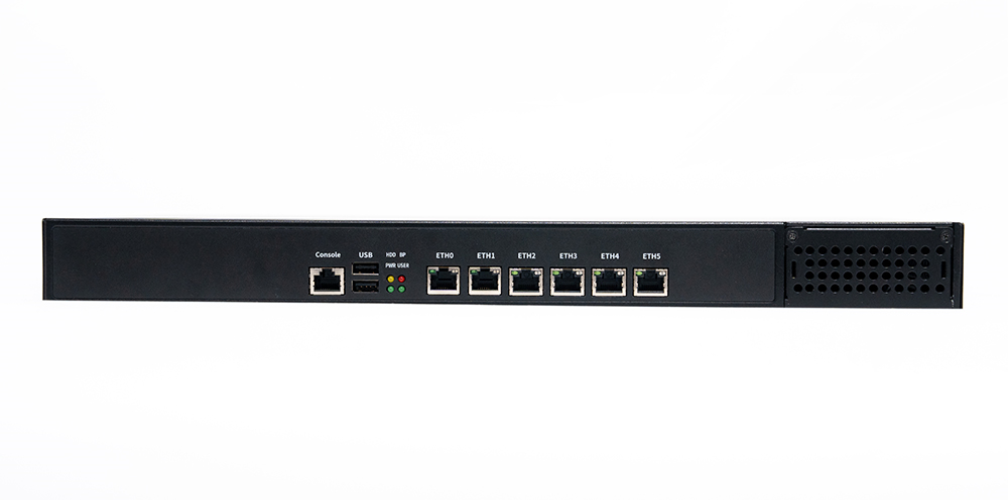
As OT networks become increasingly integrated with IT systems, securing critical industrial assets requires a proactive defense strategy tailored specifically to operational priorities. Deploying a dedicated industrial network security appliance with an advance-capable industrial firewall empowers organizations to achieve granular network visibility, enforce micro-segmentation, and protect legacy physical infrastructure against cyber threats without risking operational downtime.
By combining deep industrial protocol inspection with rugged physical hardware, industrial enterprises can confidently harness the full power of Industry 4.0 connectivity while safeguarding their most valuable assets.




COPYRIGHT © EVOC.2026 ALL RIGHTS RESERVED.
