

























Home
News Center
Industrial IoT Gateway Selection Guide: Everything You Need to Know

In the era of Industry 4.0 and smart manufacturing, operational technology (OT) networks on the factory floor are no longer isolated islands. Modern industrial facilities rely heavily on real-time telemetry, automated workflows, and predictive analytics. However, bridging legacy industrial machinery—utilizing proprietary protocols, serial interfaces, and isolated fieldbuses—with modern IT infrastructure, cloud platforms, and enterprise resource planning (ERP) systems presents a fundamental architectural challenge.
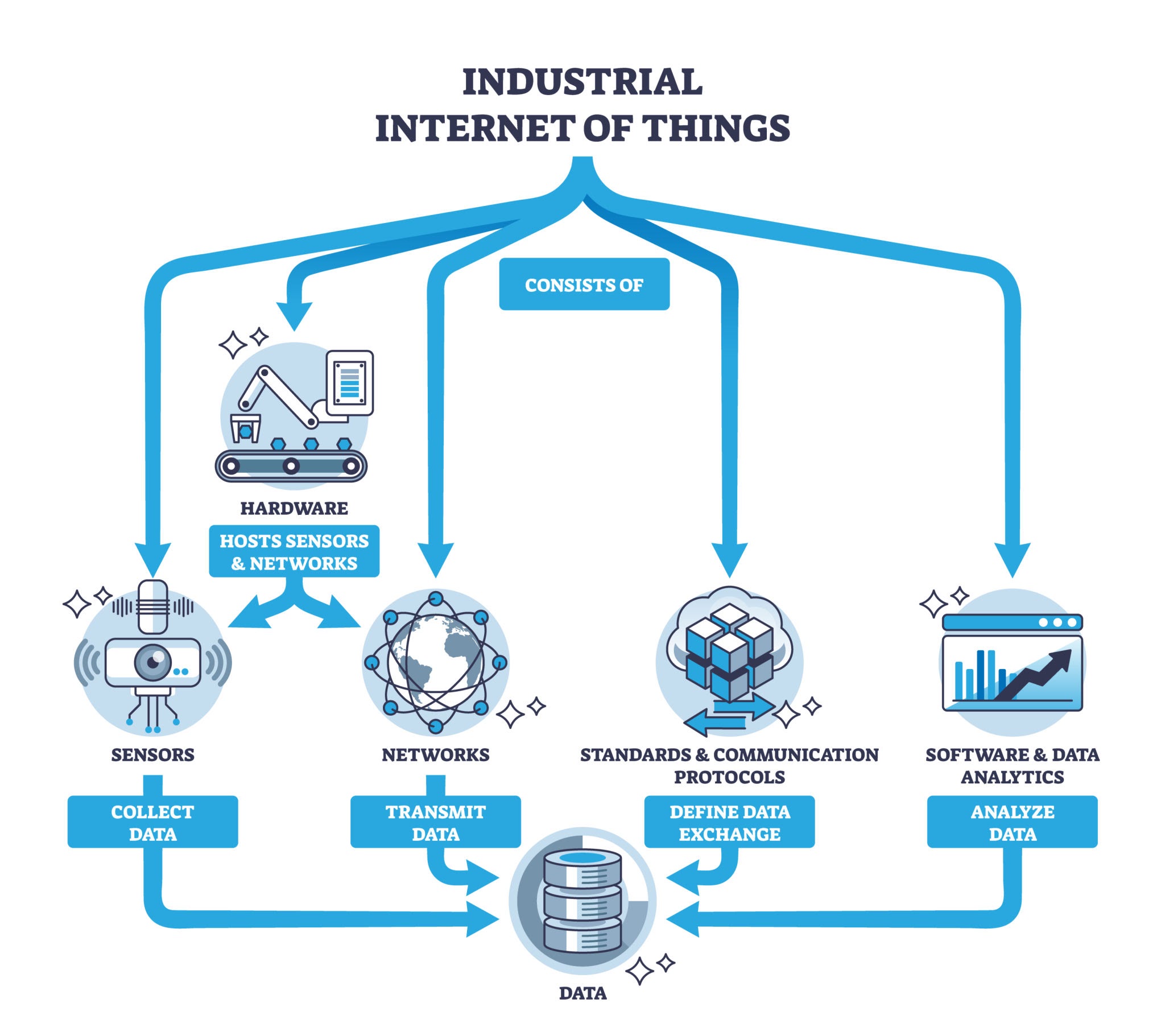
This is where the industrial IoT gateway plays a pivotal role. Serving as the vital bridge between the physical shop floor and digital enterprise software, an industrial IoT gateway aggregates data, normalizes disparate protocols, and ensures secure transmission across networks. Furthermore, as compute requirements shift closer to the data source, the high-performance edge gateway has evolved to perform localized processing, real-time control, and artificial intelligence at the edge.
Selecting the right gateway architecture is one of the most critical decisions system integrators, plant managers, and automation engineers face. Deploying inappropriate hardware can lead to costly downtime, data bottlenecks, security vulnerabilities, or premature hardware failure in harsh operating environments. This comprehensive selection guide walks you through everything you need to know to choose the optimal industrial IoT gateway and edge gateway solution for your application.
An industrial IoT gateway is a specialized physical hardware appliance or ruggedized industrial computing node configured to collect, process, translate, and transmit data between industrial equipment and central software applications (on-premise servers or public/private cloud infrastructure).
Unlike commercial or home networking gateways, an industrial IoT gateway is engineered from the ground up for mission-critical reliability under extreme conditions. It houses specialized interface ports (such as RS-232/485, CAN bus, digital I/O, and isolated Ethernet) and supports industrial communication standards that commercial routers simply cannot interpret.
Protocol Translation: Industrial environments speak dozens of distinct "languages." An IIoT gateway ingests fieldbus protocols—such as Modbus RTU/TCP, PROFINET, EtherNet/IP, EtherCAT, and BACnet—and translates them into lightweight IT-friendly protocols like MQTT, OPC UA, HTTP/REST, or AMQP.
Data Aggregation and Filtering: High-frequency machinery sensors can generate gigabytes of raw data per minute. Gateways filter noise, remove duplicate records, and aggregate essential metrics before transmission, significantly reducing bandwidth consumption and cloud storage costs.
Edge Computing and Intelligence: Modern edge gateway devices feature multi-core X86 or ARM processors, enabling them to execute edge analytics, machine learning inference models, local database storage, and containerized microservices (via Docker or Kubernetes) directly at the equipment site.
Network Isolation and Security: Serving as a firewall between OT and IT domains, the gateway prevents unauthorized outside traffic from directly accessing legacy Programmable Logic Controllers (PLCs) or critical control systems.
Evaluating hardware specs can be daunting given the massive variety of form factors and configurations available on the market. To streamline your engineering decision, use this five-tier framework to pinpoint the exact gateway specifications your operational environment requires.
Industrial environments are notoriously hostile to sensitive electronic components. High temperatures, dust accumulation, continuous vibration, and electrical interference can degrade standard commercial hardware within weeks.
When uating an industrial IoT gateway, verify the following environmental safeguards:
Operating Temperature Range: Standard commercial devices operate between 0°C and 40°C. True industrial-grade gateways support wide-temperature operation, typically spanning -40°C to 75°C (or higher), allowing deployment in outdoor enclosures, roadside cabinets, or unconditioned factory floors.
Thermal Management (Fanless Architecture): Cooling fans are the primary point of mechanical failure in industrial computing. A fanless design with extruded aluminum heatsinks eliminates dust ingress and protects internal electronics from conductive particulate matter.
Vibration and Shock Resistance: Equipment mounted on or near heavy manufacturing machinery, rail transport, or mining vehicles must comply with standards like IEC 60068-2-27 (shock) and IEC 60068-2-64 (vibration).
Ingress Protection (IP Rating): Choose an appropriate IP rating based on exposure. IP30 or IP40 aluminum chassis are ideal for indoor control cabinets, whereas IP67/IP68 sealed enclosures are mandatory for washdown environments or unshielded outdoor sites.
Mounting Options: Ensure the chassis supports standard industrial mounting configurations, including DIN-rail, wall-mounting, or 19-inch rack mounting.
Your gateway must physically and logically connect to your existing legacy infrastructure while accommodating future equipment additions.
Physical Interfaces (I/O)
Serial Ports: Legacy devices rely heavily on RS-232, RS-422, or software-configurable RS-485 ports with optical isolation to protect against ground loops and power surges.
Ethernet Ports: Multiple independent Ethernet controllers (LAN/WAN separation) allow the gateway to bridge physically isolated OT and IT subnets without multi-homing risks. Look for Gigabit Ethernet ports, optionally with Power over Ethernet (PoE/PoE+) to power IP cameras or edge sensors directly.
Digital & Analog I/O: Integrated Digital Inputs (DI), Digital Outputs (DO), and Analog Inputs (AI) allow the gateway to directly monitor legacy machinery that lacks native digital communication ports.
Fieldbus and OT Protocols
Ensure native driver support or pre-integrated middleware for:
Modbus RTU /Modbus TCP
OPC UA / OPC DA
PROFINET / PROFIBUS
EtherNet/IP
CANopen / SAE J1939 (for automotive and heavy machinery)
3. Network Connectivity & Redundancy
A reliable edge gateway must maintain network uptime, even during primary link failures.
Cellular Options (4G LTE / 5G): Crucial for remote assets like solar farms, oil platforms, or mobile fleets. Look for dual-SIM fallback support to switch telecom providers automatically if signal degradation occurs.
Wi-Fi & Bluetooth (BLE): Useful for short-range wireless sensor nodes, local engineer configuration, or indoor asset tracking.
Low-Power Wide-Area Networks (LPWAN): Integrated LoRaWAN or NB-IoT modules allow gateways to collect telemetry from battery-powered sensors spread across several kilometers.
WiredRedundancy: Support for network redundancy protocols like RSTP (Rapid Spanning Tree Protocol) or MRP (Media Redundancy Protocol) ensures sub-second recovery times if a physical cable fails.
Determining how much processing power your deployment needs depends entirely on where data processing occurs.
Lightweight Telemetry Gateways: If the goal is simple data acquisition, protocol mapping, and passing values to a cloud MQTT broker, low-power ARM Cortex (A35/A53/A72) architecture with1GB–4GB RAM is highly cost-effective and energy-efficient.
High-Performance Edge Computing Gateways: If your application requires localized data analytics, real-time closed-loop control, video analytics, or containerized microservices, select an X86-based architecture (Intel Core, Intel Atom, or Celeron) with 8GB–32GB RAM and high-speed NVMe storage.
AI Accelerators: For automated optical inspection (AOI), predictive maintenance via acoustic analysis, or edge computer vision, select an edge gateway equipped with integrated NPU (Neural Processing Unit) acceleration or expansion slots (M.2/PCIe) for Hailo or NVIDIA Jetson modules.
Because IIoT gateways occupy a critical juncture between OT networks and the public internet, they represent a key target for cyber threats. Security cannot be treated as an afterthought.
Hardware-Based Security: Look for built-in TPM 2.0 (Trusted Platform Module) chips to store encryption keys securely, alongside Secure Boot functionality to prevent unauthorized bootloader modifications.
Encrypted Transmission: Native support for TLS 1.3, IPsec VPNs, OpenVPN, WireGuard, and HTTPS prevents eavesdropping and data tampering over public networks.
Over-the-Air (OTA) Updates: Managing hundreds of distributed gateways manually is impossible. The system must support secure, atomic OTA firmware and OS updates with automatic roll-back protection in case of deployment interruption.
While the terms are often used interchangeably, understanding the distinction between a basic industrial IoT gateway and a full-featured edge gateway helps prevent over-provisioning hardware budgets or under-provisioning compute capabilities.
Feature / Dimension | Standard Industrial IoT Gateway | High-Performance Edge Gateway |
Primary Objective | Data pass-through, protocol conversion, basic buffering | Localized compute, real-time analytics, AI, OT control |
Processor Architecture | Low-power ARM / RISC cores | High-throughput ARM / x86 multi-core CPUs |
Memory & Storage | 512MB – 4GB RAM / eMMC storage | 8GB – 64GB RAM / High-speed NVMe SSDs |
Software Capability | Fixed firmware, basic Linux/RTOS | Docker, Kubernetes, Linux, Windows 10 IoT, AI frameworks |
Response Latency | Seconds (dependent on cloud round-trip) | Milliseconds (processed locally at the edge) |
Typical Deployment | Remote metering, environmental sensing | Vision inspection, machine learning, robotics, SCADA |
On automated assembly lines, vibration, temperature, and current sensors continuously monitor high-value CNC machines. An edge gateway ingests high-frequency vibration data over Modbus or IO-Link, executes a local anomaly detection algorithm, and immediately s operators to bearing wear before catastrophic breakdown occurs—all without streaming raw gigabytes to the cloud.
In distributed solar power installations or electrical substations, environmental conditions are harsh, and cellular bandwidth is expensive. An industrial IoT gateway with a wide operating temperature range (-40°C to 75°C) collects data from power meters over RS-485, aggregates hourly metrics, and transmits filtered reports over a secure 4G LTE link with dual-SIM redundant backup.
In urban transit systems, in-vehicle edge gateways installed on buses or trains handle route tracking via GPS, collect vehicle diagnostic metrics over CAN bus, manage digital signage displays, and store surveillance video locally for offloading via Wi-Fi at the depot.
Building a resilient, high-availability IIoT network requires hardware designed for zero-compromise operation. As a global pioneer in industrial computing technology, EVOC offers a robust portfolio of industrial PCs, embedded box computers, and custom edge gateway solutions designed specifically to meet demanding industrial challenges.
Industrial-Grade Reliability: EVOC products undergo rigorous testing against extreme thermal cycles, electromagnetic interference (EMC), shock, and vibration.
Flexible Customization: From custom I/O port combinations and specialized expansion slots to custom OS builds, EVOC tailors hardware solutions to match exact project specifications.
Global Certifications: Complete compliance with CE, FCC, RoHS, and industry-specific safety standards ensures smooth global deployment.
Long Lifespan & Supply Stability: EVOC guarantees extended product lifecycles (5–10 years), protecting system integrators from frequent redesign costs due to component obsolescence.
Choosing the right industrial IoT gateway or edge gateway requires a clear understanding of your physical operating environment, I/O requirements, protocol ecosystem, network topology, and processing needs. By uating hardware along these core vectors, you ensure seamless OT/IT integration, robust cyber protection, and long-term operational performance.
Whether you are upgrading a legacy factory floor or building a next-generation smart energy grid, EVOC’s industrial hardware experts are here to assist you at every phase of system design.




COPYRIGHT © EVOC.2026 ALL RIGHTS RESERVED.
