





























Home
News Center
Embedded System Design for OEM Applications: From Concept to Deployment

In today’s competitive industrial landscape, Original Equipment Manufacturers (OEMs) face mounting pressure to deliver smarter, faster, and more connected machinery. Whether building next-generation medical diagnostic devices, autonomous mobile robots (AMRs), precision semiconductor manufacturing tools, or intelligent transportation systems, the computing brain inside the machine determines its competitive edge.
However, transitioning an industrial product from a napkin sketch to mass-market deployment is fraught with engineering hurdles. Unlike off-the-shelf commercial PCs, industrial hardware must operate continuously in unforgiving physical environments, meet strict regulatory compliance standards, and remain available for a decade or more without forced architectural redesigns. This is why mastering embedded system design is essential for modern OEM applications.
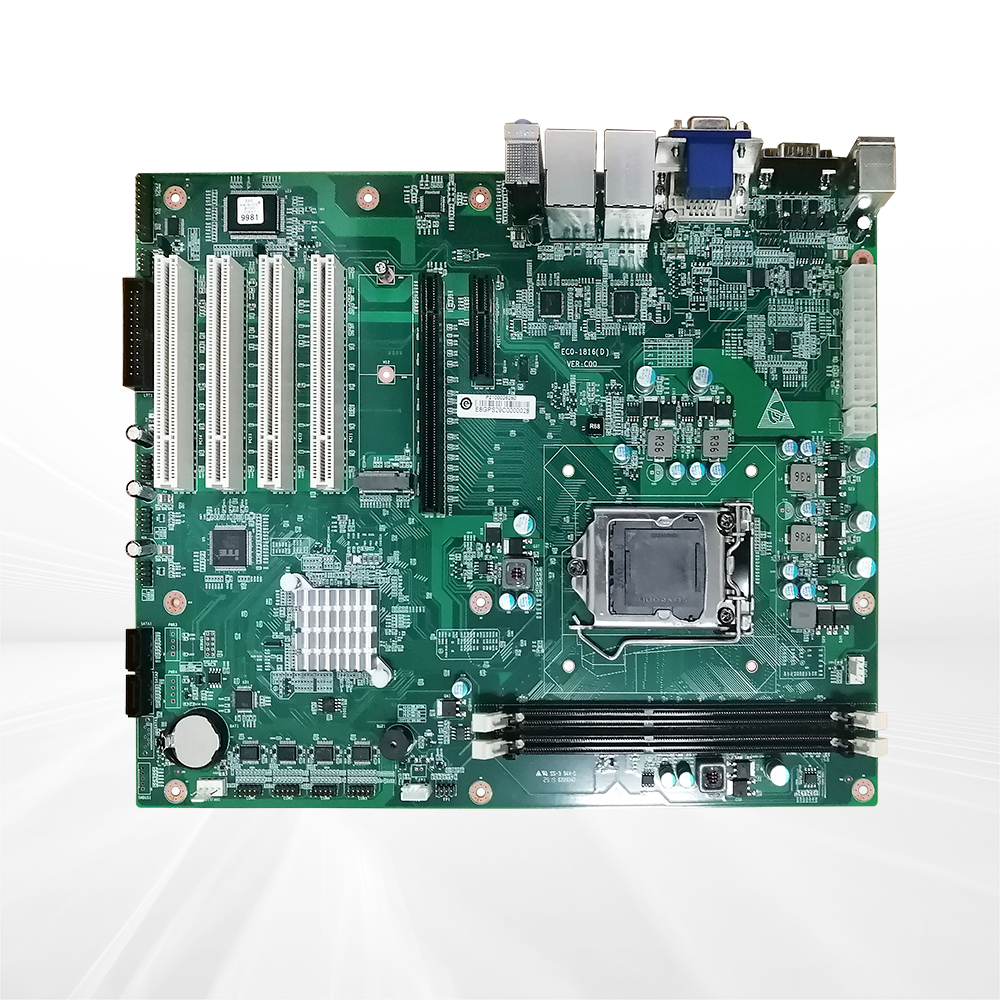
When developing a new machine or instrument, engineering teams often begin prototyping using standard commercial single-board computers (SBCs) or off-the-shelf desktop components. While useful for initial software proof-of-concept, commercial hardware rapidly breaks down when exposed to the realities of industrial OEM applications:
· Short Component Lifecycles: Consumer processors and motherboards typically remain on the market for 12 to 24 months before being discontinued. For an OEM selling capital equipment with a 10-year service life, frequent hardware revisions trigger costly software re-validation and recertification cycles.
· Environmental Vulnerability: Standard PCs rely on active cooling fans that ingest dust and moisture, and their commercial-grade capacitors fail prematurely under high heat or continuous mechanical vibration.
· Suboptimal Form Factors & I/O: Off-the-shelf boards rarely match the exact mechanical footprint of a custom machine enclosure, forcing engineers to use fragile internal adapter cables and external converters that increase bill-of-materials (BOM) costs and points of failure.
· Lack of Brand & Firmware Control: OEMs require custom BIOS/UEFI branding, locked boot sequences, hardware-level security (TPM 2.0), and tailored operating system images that commercial hardware cannot provide out of the box.
Purpose-built embedded system design eliminates these bottlenecks by aligning compute architecture, mechanical footprint, and lifecycle supply guarantees directly with the OEM’s commercial roadmap.
Bringing a custom or semi-custom embedded platform to market requires a disciplined, stage-gated engineering process. Following a structured six-phase roadmap minimizes redesign risks and accelerates time-to-market.
Every successful hardware program begins by translating business and operational goals into concrete engineering specifications. Before selecting a single chip, define:
· Compute & AI Workloads: Determine CPU core counts, clock speeds, memory bandwidth, and whether dedicated Neural Processing Units (NPUs) or discrete GPUs are required for edge computer vision or real-time analytics.
· I/O and Interface Mapping: List every external sensor, actuator, display, and network interface—including legacy serial ports (RS-232/422/485), CAN bus, isolated Digital I/O, high-speed USB 3.2, PCIe lanes, and multi-Gigabit Ethernet with PoE+.
· Mechanical & Envelope Constraints: Establish maximum allowable board dimensions (X, Y, Z height), mounting hole locations, and connector orientations to ensure seamless integration into the host chassis.
· Power Budget: Specify available input voltage ranges (e.g., wide-range 9V–36V DC), maximum thermal design power (TDP), and ignition power management requirements for vehicle-mounted equipment.
One of the most pivotal decisions in embedded system design is selecting between an off-the-shelf industrial board, a modular Computer-on-Module (COM) architecture, or a fully custom Single Board Computer (SBC).
Architectural Approach | Best Fit For | Key Advantages | Trade-Offs |
Standard Industrial SBC (3.5", Pico-ITX, Mini-ITX) |
Low-to-medium volume OEMs with standard I/O needs |
Fastest time-to-market; zero NRE (Non-Recurring Engineering) cost |
Fixed connector placement; potential need for internal cabling |
Computer-on-Module (COM) (COM Express, SMARC, COM-HPC) |
Mid-to-high volume OEMs needing custom I/O & upgradeability |
Separates CPU core from custom carrier board; easy future CPU upgrades |
Requires custom carrier board PCB layout and validation |
Full-Custom Embedded Board |
High-volume, space-constrained, or highly specialized machinery |
Exact mechanical fit; lowest per-unit BOM cost at scale; zero unused I/O |
Higher upfront NRE investment and longer initial development cycle |
For many industrial OEM applications, the Computer-on-Module (COM) + Custom Carrier Board model strikes the ideal balance. By placing complex high-speed CPU, memory, and power circuitry on a standardized module (such as COM Express Type 6 or Type 10), the OEM only needs to design a relatively simple carrier board tailored to their exact connectors and mechanical outline.
Once the architecture is locked, hardware engineers move into electronic design automation (EDA). In high-speed modern embedded systems, layout precision dictates long-term field reliability:
· High-Speed Signal Integrity: Interfaces such as PCIe Gen 4/5, DDR5 memory, USB 3.2, and 10GbE require strict impedance control, differential pair length matching, and careful stack-up planning to prevent crosstalk and data corruption.
· Power Delivery Network (PDN): Multi-core processors demand clean, stable low-voltage rails with rapid transient response. Proper decoupling capacitor placement and wide power planes prevent voltage droop during sudden workload spikes.
· Isolation & Surge Protection: Industrial environments suffer from ground loops and inductive voltage spikes. Incorporating optical isolation on serial/GPIO lines and TVS diodes on external ports protects core silicon from catastrophic field damage.
Heat is the primary enemy of electronic longevity. In sealed enclosures where cooling fans are prohibited due to dust, sterility (medical), or acoustic limits, thermal management must be engineered from day one.
Using Computational Fluid Dynamics (CFD) thermal simulation, engineers model airflow and heat conduction paths from the processor die through thermal interface materials (TIMs), copper heat pipes, and extruded aluminum chassis walls. Ensuring junction temperatures stay well below manufacturer limits—even at -40°C to 75°C ambient operating temperatures—prevents thermal throttling and extends Mean Time Between Failures (MTBF).
Hardware is only half of the equation. A production-ready embedded platform requires a tightly integrated software foundation:
· Custom BIOS / UEFI: Disabling unused peripherals to speed up boot times, embedding the OEM's custom splash logo, configuring watchdog timers, and setting default power-loss recovery states.
· Board Support Package (BSP) & Drivers: Delivering verified drivers for specialized I/O controllers, touchscreens, and hardware security modules across Windows 10/11 IoT Enterprise, Ubuntu/Debian Linux, or Real-Time Operating Systems (RTOS).
· Hardware Security Hardening: Enabling Secure Boot, TPM 2.0 cryptographic key storage, and read-only root filesystems to protect proprietary OEM software IP and prevent unauthorized tampering in the field.
Before shipping to end customers, the integrated system must pass rigorous environmental and regulatory verification:
· DVT / PVT Testing: Design Verification Testing (DVT) and Production Verification Testing (PVT) subject prototypes to thermal shock chambers, HALT (Highly Accelerated Life Testing), and sine/random vibration tables (IEC 60068).
· EMC & Safety Certifications: Pre-compliance and accredited lab testing for FCC, CE, UL/IEC 62368-1, as well as industry-specific standards such as IEC 60601 (medical) or EN 50155 (railway).
· Supply Chain & Lifecycle Lock: Establishing a controlled BOM with strict Engineering Change Notice (ECN) policies ensures every unit produced in year five behaves identically to the unit shipped on day one.
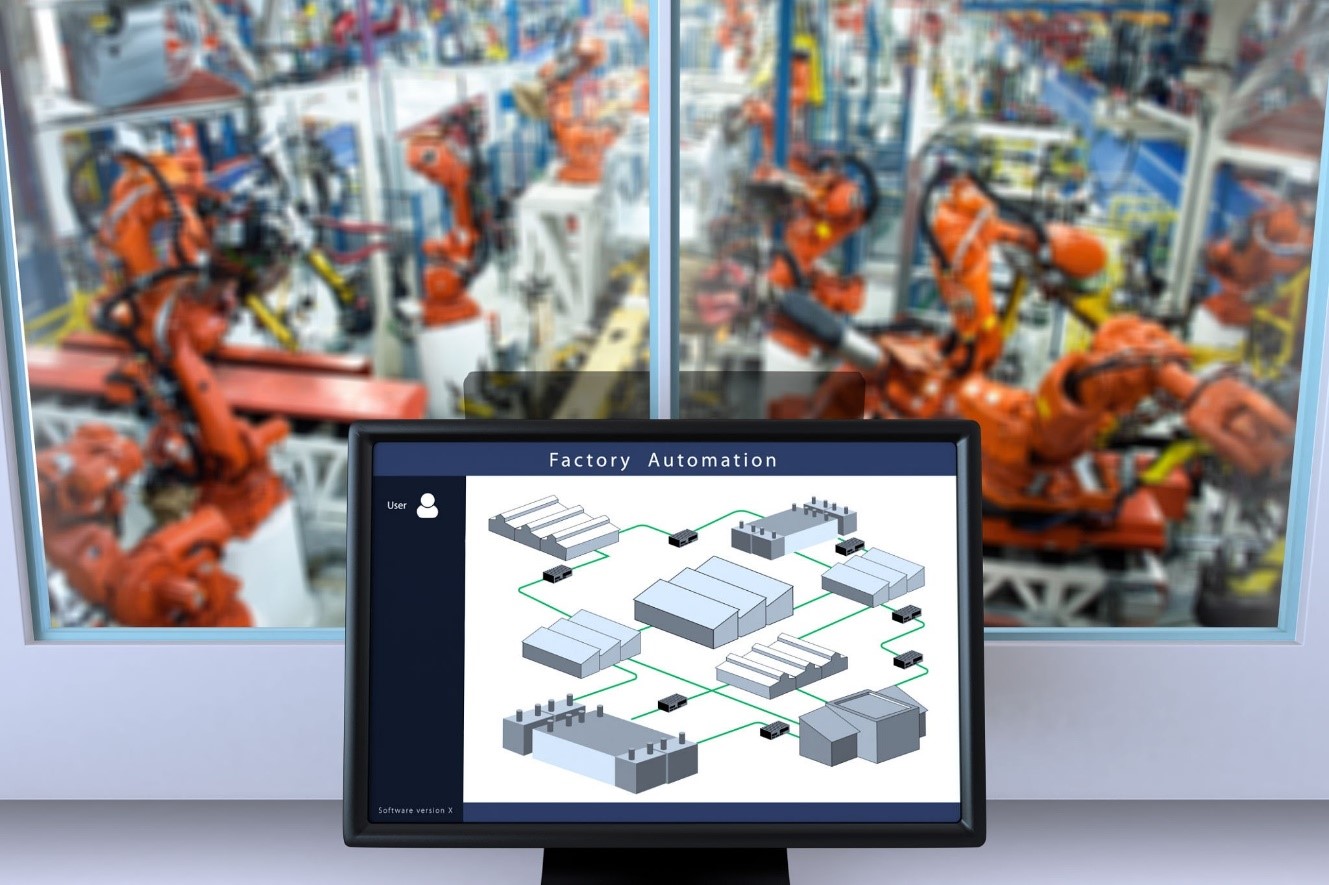
To avoid unexpected redesigns mid-lifecycle, OEM engineering teams should prioritize four foundational pillars during vendor uation:
1. Embedded Roadmap Alignment: Always build around processors listed on Intel® or ARM® embedded/industrial roadmaps, which guarantee 7 to 15 years of silicon availability rather than consumer retail lifecycles.
2. Design for Manufacturability (DFM) & Testability (DFT): Incorporating automated optical inspection (AOI) fiducials, accessible test points, and standardized flashing headers lowers assembly defects and speeds up factory quality control.
3. Future-Proof Scalability: Leaving spare M.2 (Key B/E/M) or Mini-PCIe expansion slots allows OEMs to add 5G cellular connectivity, Wi-Fi 6E/7, or AI accelerator modules in future product revisions without re-spinning the mainboard.
4. Global Logistics & RMA Support: Partnering with a hardware manufacturer capable of regional warehousing, pre-loading custom OS images at the factory, and providing responsive failure analysis streamlines global scaling.
Navigating the complexities of embedded system design requires more than a component supplier—it demands an engineering partner with deep industrial domain expertise. As a global leader in industrial computing, EVOC empowers OEMs across automation, medical technology, energy, and transportation to bring differentiated products to market faster and with lower risk.
· Comprehensive Hardware Portfolio: From ultra-compact 3.5-inch SBCs and COM Express modules to fully integrated fanless box PCs and industrial panel PCs, EVOC provides proven building blocks ready for rapid customization.
· End-to-End ODM/OEM Engineering: EVOC’s dedicated R&D teams handle custom carrier board design, mechanical chassis tooling, thermal simulation, custom BIOS development, and regulatory certification support under one roof.
· Strict Industrial Quality Assurance: Every platform undergoes comprehensive environmental stress testing, EMC verification, and 100% burn-in testing to guarantee continuous 24/7 operation in harsh field conditions.
· Guaranteed Long-Term Supply: With lifecycle commitments spanning 7 to 10+ years and proactive component lifecycle management, EVOC protects your engineering investment against sudden part obsolescence.
Ready to accelerate your next OEM hardware program? Contact EVOC’s embedded engineering specialists today to discuss your technical specifications and request a tailored architectural consultation.




COPYRIGHT © EVOC.2026 ALL RIGHTS RESERVED.
